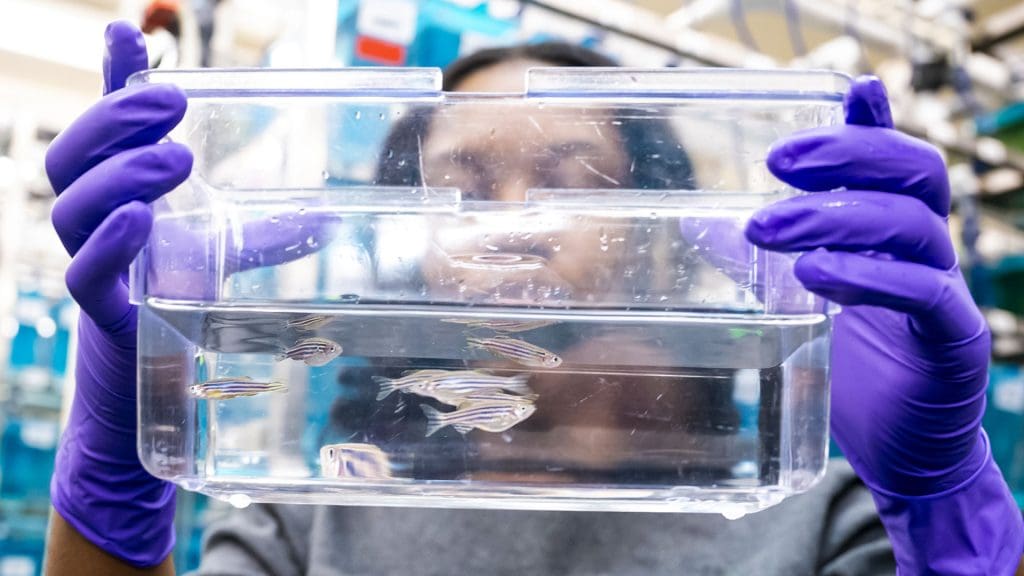
Junior high school students in Ghana will soon use zebrafish to learn science just as middle school students do in Baltimore.
BioEYES Baltimore, a program of the Krieger School, has received the first installment of a $400,000 gift to replicate the program in Accra, Ghana. A K-12 science program that brings live fish into classrooms to teach the fundamentals of biology and boost students’ interest in science, BioEYES incorporates teacher empowerment and provides professional development seminars and a co-teaching experience with trained science consultants. BioEYES Baltimore is one of 10 partner sites around the U.S. and Australia.
In the first of the grant’s three years, Baltimore staff will support Patrick Amoateng, associate professor of neuropharmacology and head of the Department of Pharmacology and Toxicology at the University of Ghana School of Pharmacy, as he develops a BioEYES outreach program with international schools in Accra.
“This is a real milestone for BioEYES to expand our efforts to Africa. We are providing the infrastructure to maintain a zebrafish colony for BioEYES while simultaneously supporting our academic partner’s research program with a state-of-the-art zebrafish rack system,” said Steven Farber, professor in the Department of Biology and scientific advisor to BioEYES Baltimore. Farber founded BioEYES in 2002.
The start of BioEYES
Farber and Amoateng met through the former president of the International Zebrafish Society. Amoateng, who studies medicinal plants with ethnomedicinal uses in epilepsy, psychosis, pain, inflammation, and cancer, already has experience teaching general science and mathematics to junior high school students and was interested in hosting BioEYES in his lab. In addition to expanding learning opportunities for children around Accra, the project will also introduce the broader scientific community in West Africa to the research value of zebrafish.
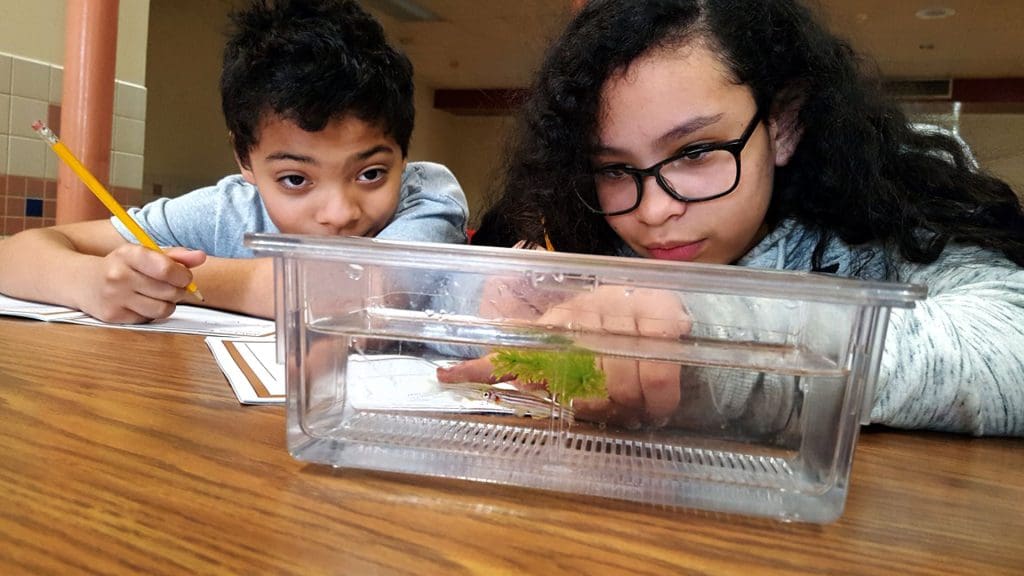
Like organisms such as yeast and fruit flies, zebrafish are useful models in various genetic studies because of their short reproductive cycle. The embryos are also transparent, allowing scientists—and their students—to observe developmental processes as they occur internally. And because their genome is similar to the human version, they can offer insight into human diseases.
In its first year, the Deborah Rose Foundation gift will support the installation of equipment; breeding fish and creating a stable zebrafish population; establishing an outreach educator; and piloting the program in two schools. The Baltimore site will provide training and evaluation. The New York-based foundation supports projects in education, science, and human services.