An interdisciplinary Johns Hopkins University project that will support humanities scholars in interpreting structures and patterns within works of poetry, music, text, and other materials has been awarded two-year funding by Schmidt Sciences.
Humans create and understand meaning through hierarchies, often specialized to a particular medium—poetry has meter and rhyme, music has phrases and motifs, and narrative has arcs and tropes, says principal investigator Tom Lippincott, director of the Krieger School’s Center for Digital Humanities and associate research professor in the Whiting School’s Department of Computer Science. These are critical units of humanistic inquiry and of the cognitive processes behind our comprehension of these artifacts, but artificial intelligence models are not often designed to find and interpret these structures in a systematic fashion.
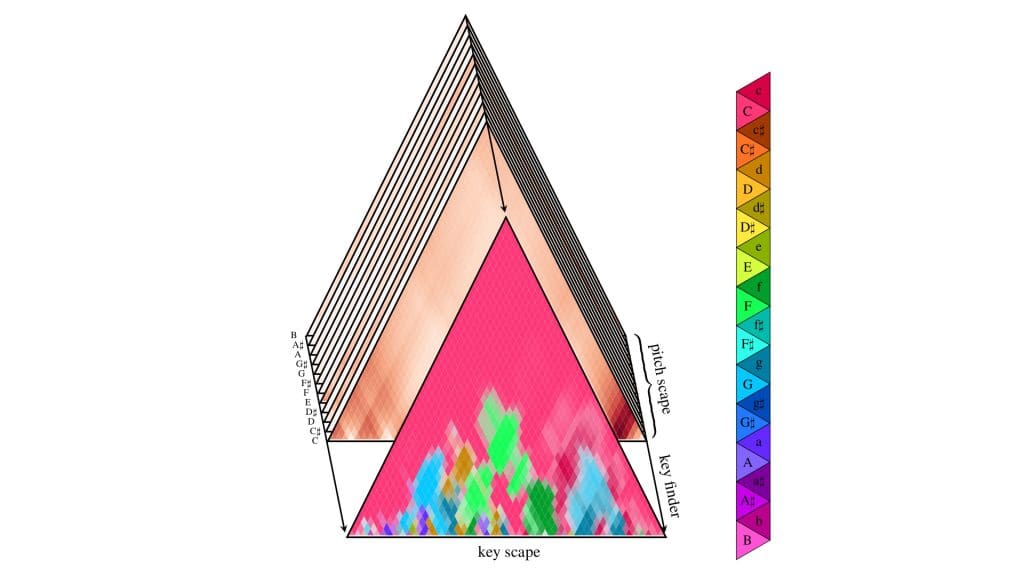
A visualization of hierarchical structure in Bach’s Prelude in C Major
across time and frequency domains.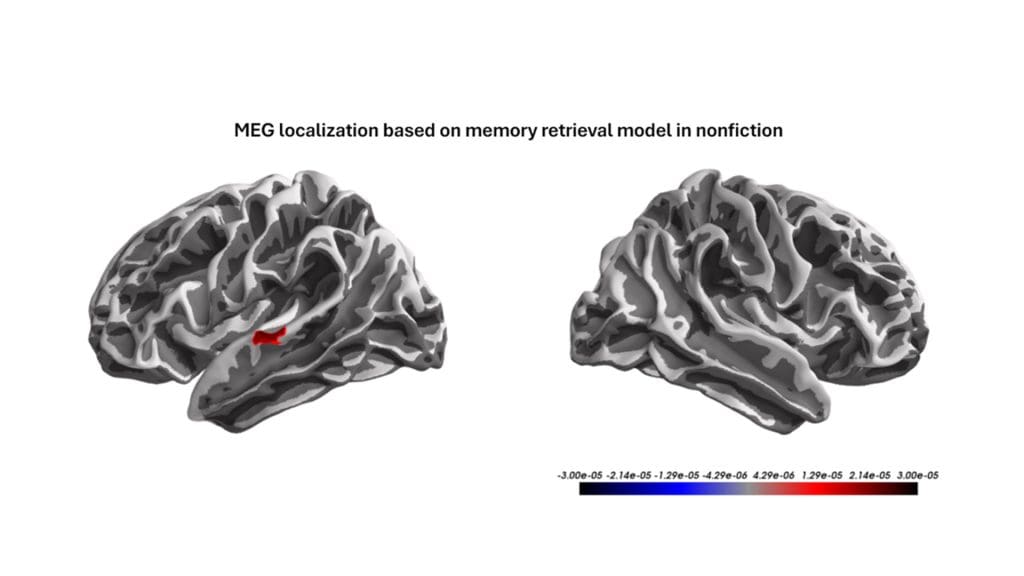
Brain scan (MEG) showing localization of memory retrieval
while processing narrative prose.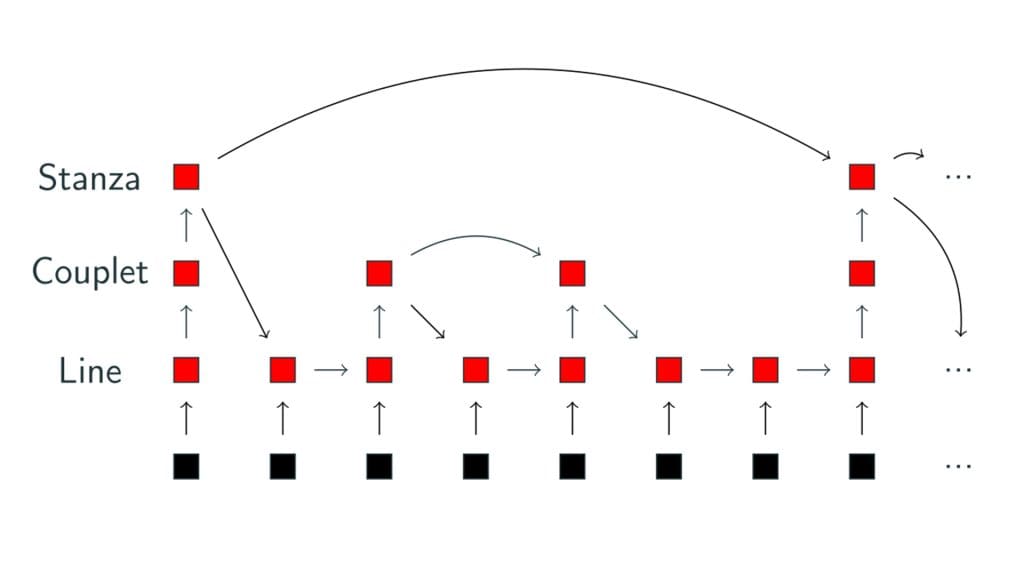
An illustration of how a simple gated model might
reflect natural divisions of poetic form.
Modeling meets humanities
The project, “An ML Toolkit to Find Hierarchical Structure in Multimodal and Multilingual Data,” will produce a Python library to help researchers uncover and explore the latent hierarchical organization within poetry, narrative, and music. It aims to bridge the gap between computational modelling, cognition, and humanistic inquiry.
“Developing AI models tailored for discovering and interpreting structure will allow humanists to verify and challenge our understanding of how a variety of cultural practices are such effective conduits for knowledge and experience,” Lippincott says.
Other investigators include John Hale, professor and chair of the Department of Cognitive Science, as well as Meredith Martin at Princeton and Robert Lieck at Durham University in the UK.
Schmidt Sciences was founded in 2024 to accelerate scientific knowledge and breakthroughs with the most promising, advanced tools. The 2025 Humanities and AI Virtual Institute award supports groundbreaking work at the intersection of AI and the humanities. In this inaugural round, Schmidt has awarded $11 million to 23 research teams around the world who are exploring new ways to bring artificial intelligence into dialogue with the humanities.